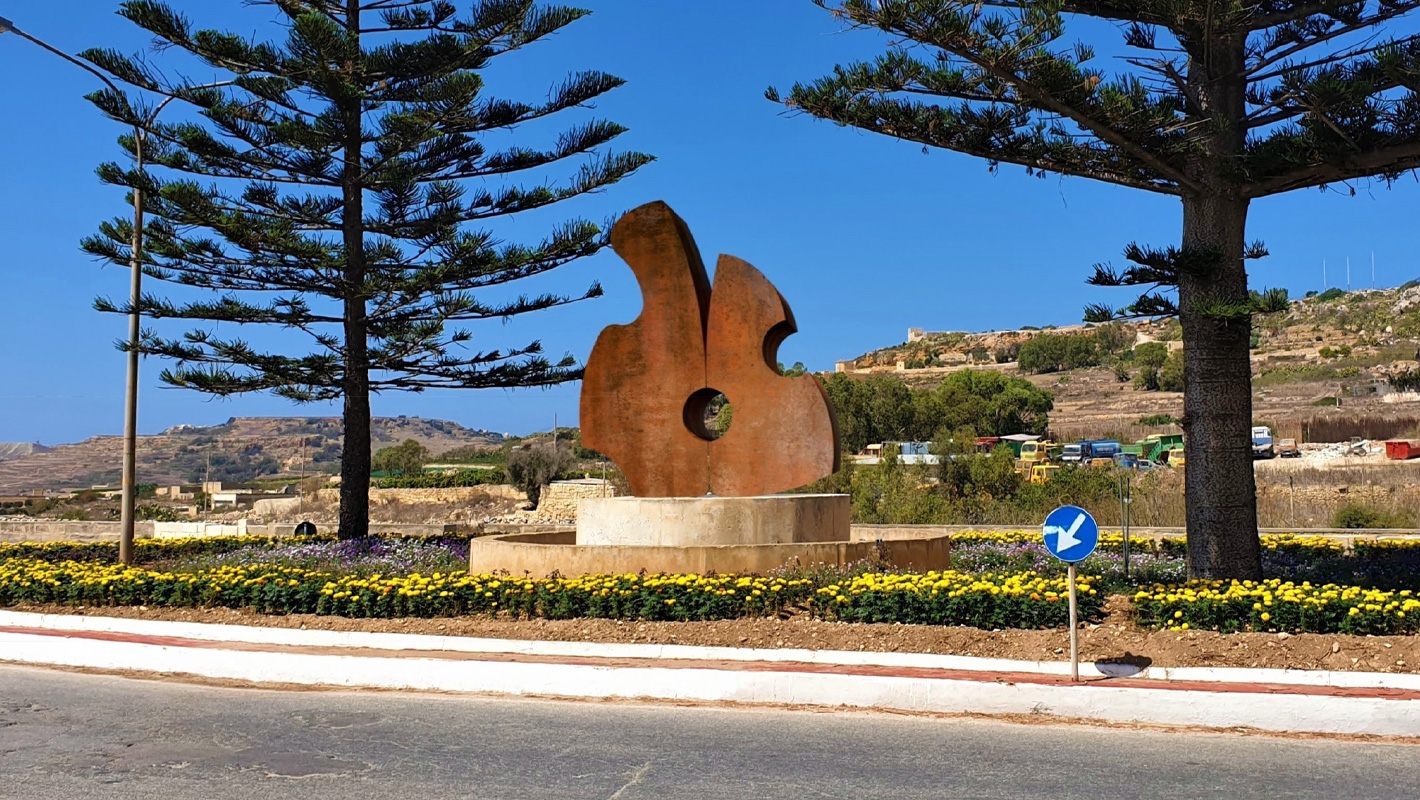
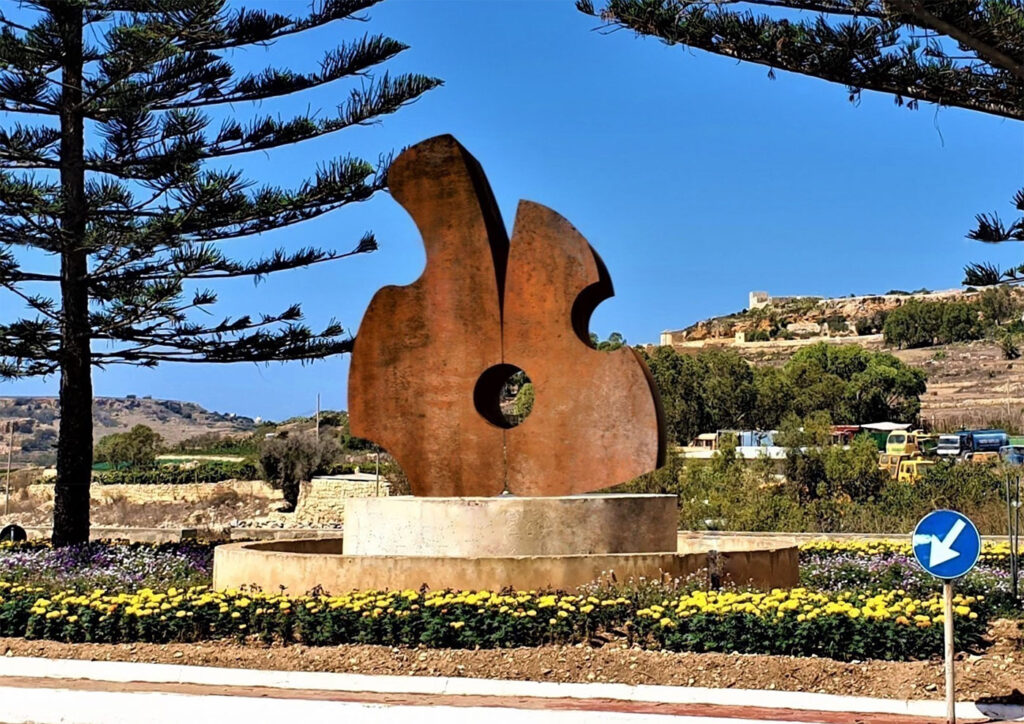
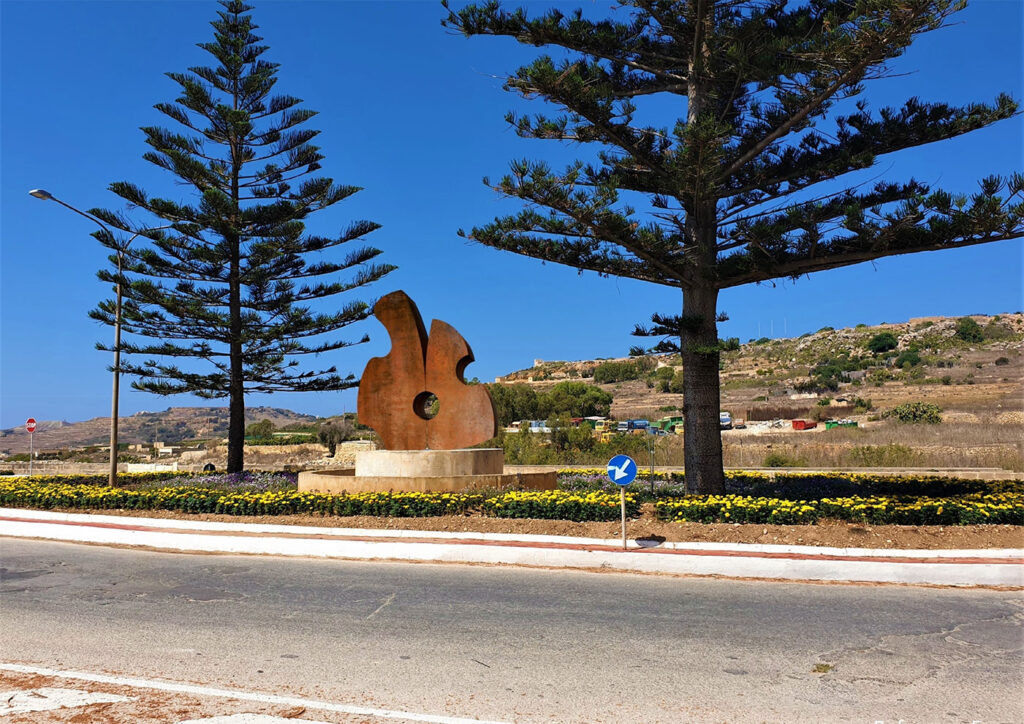
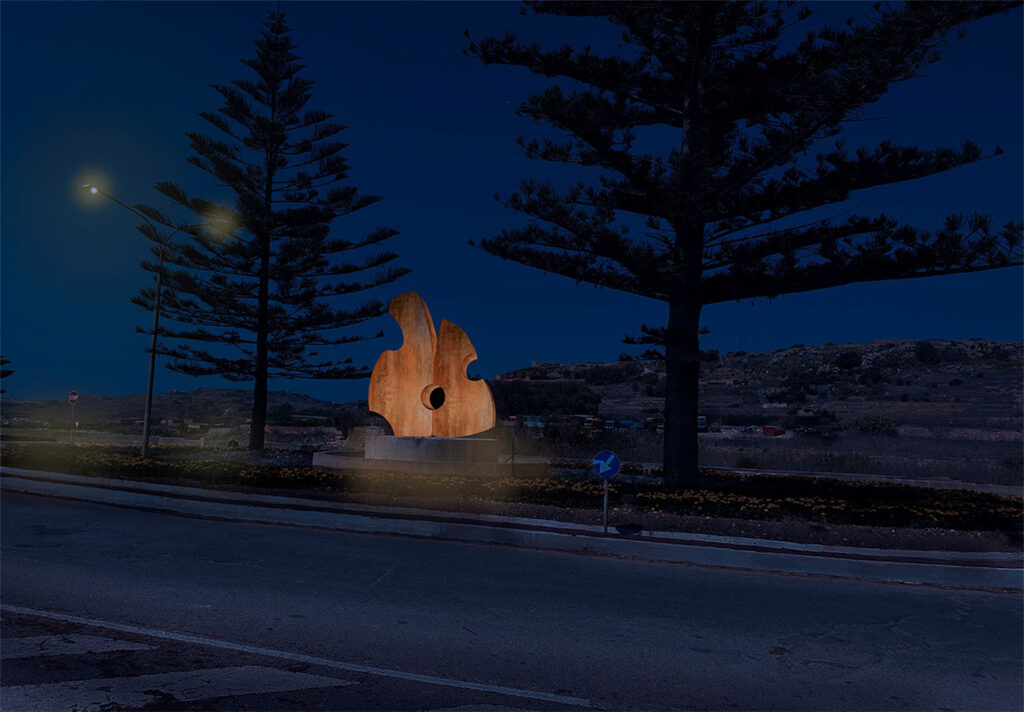
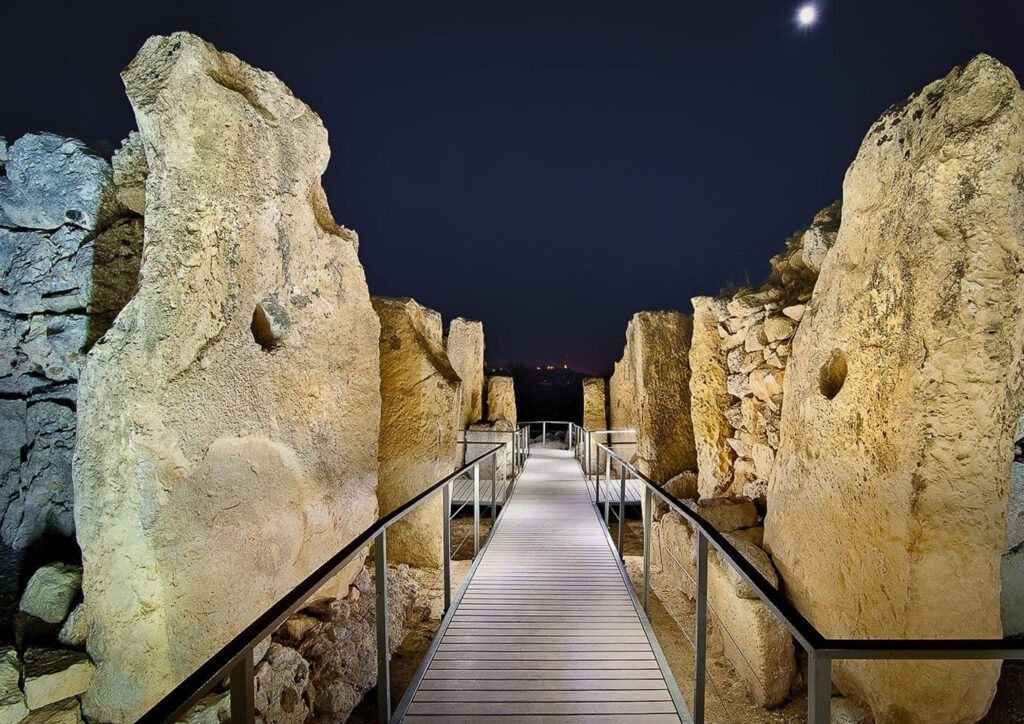
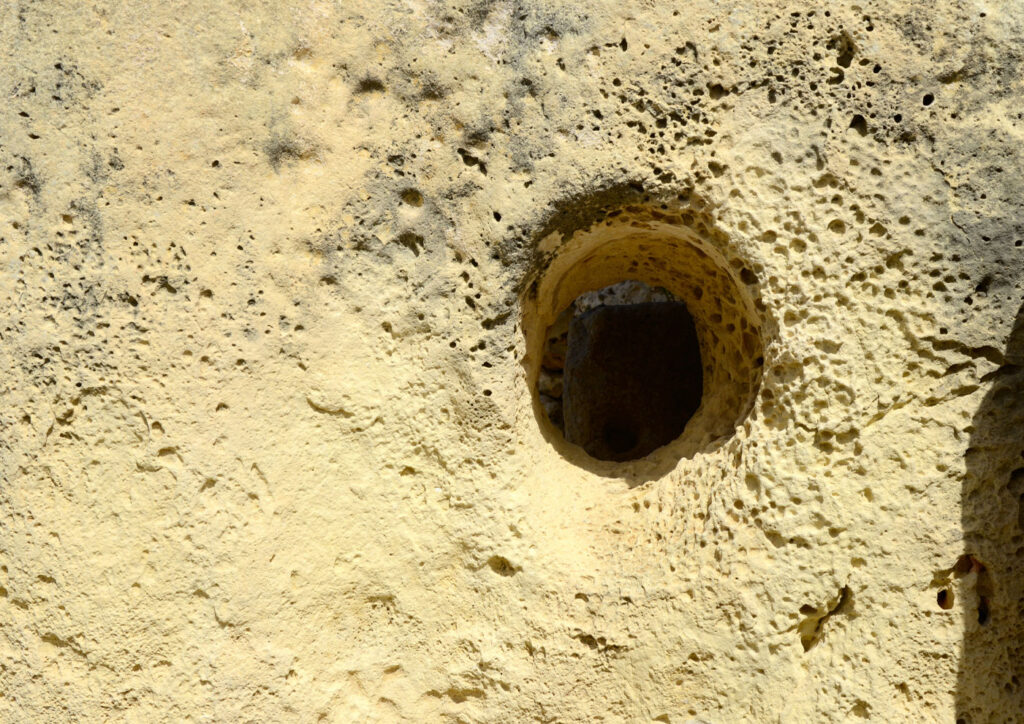
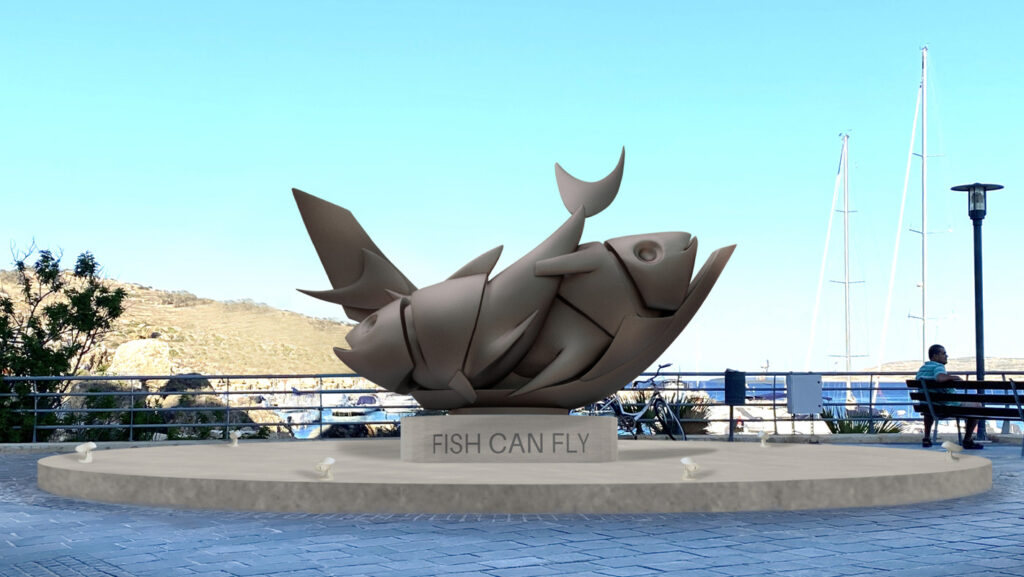
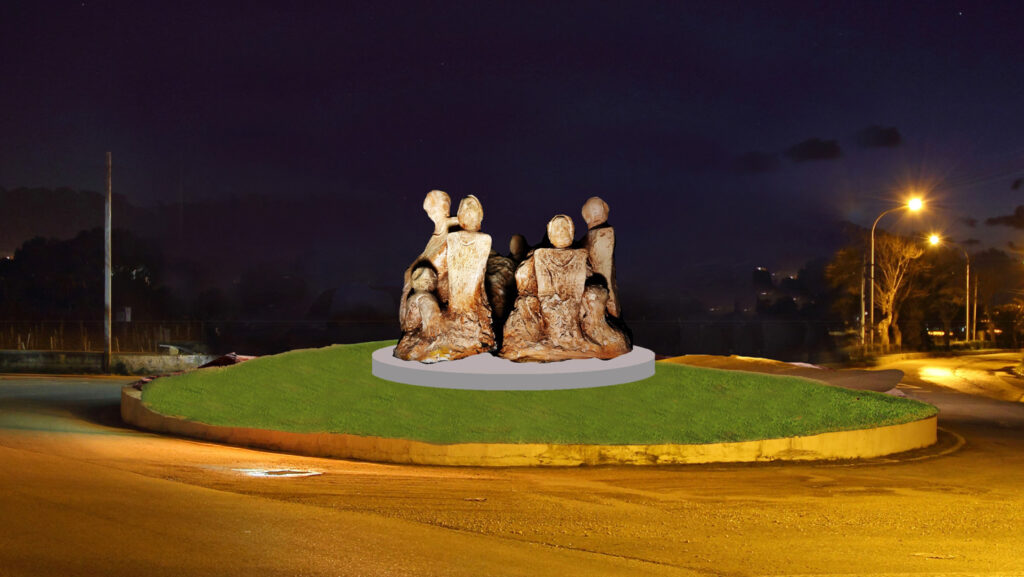
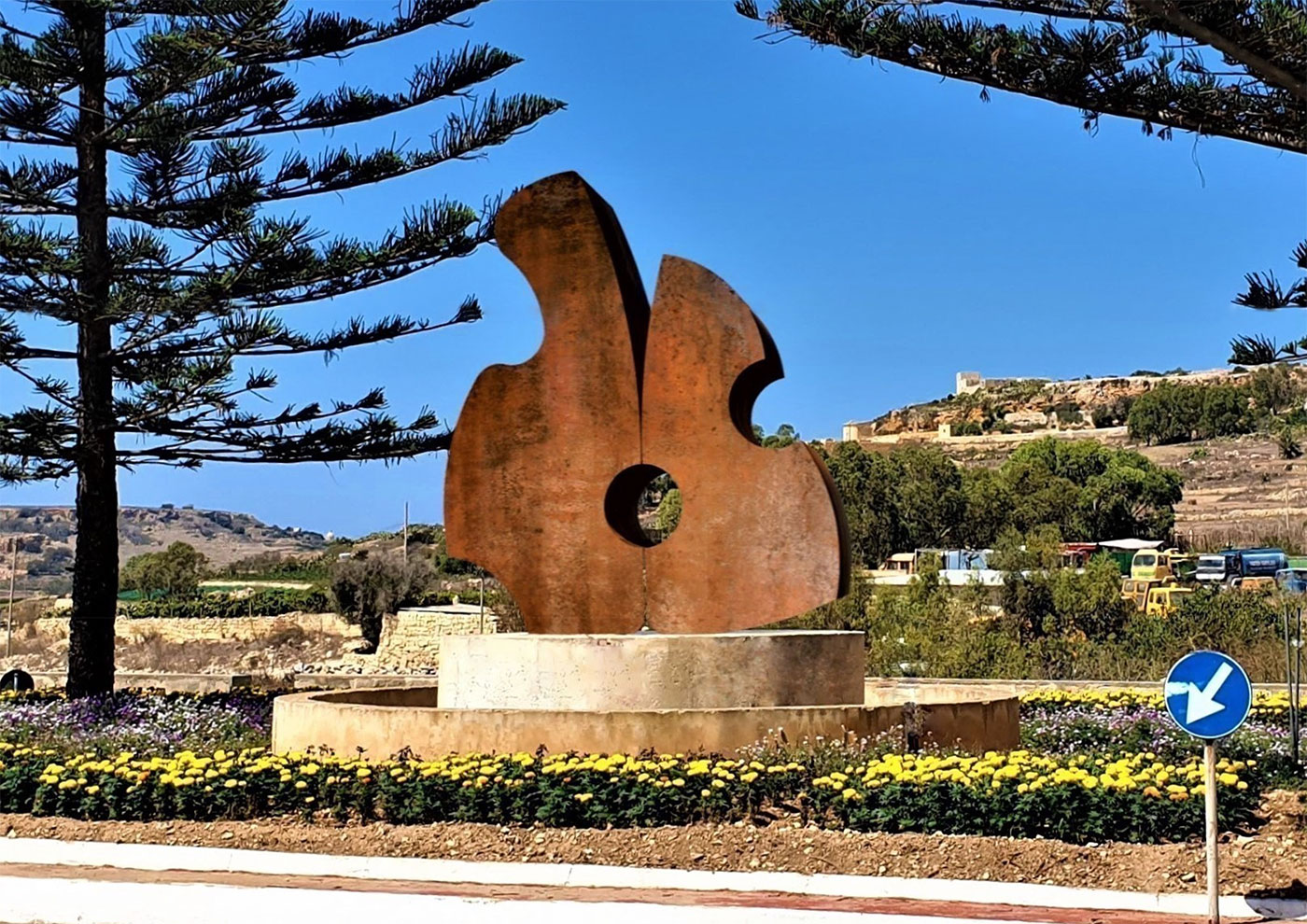
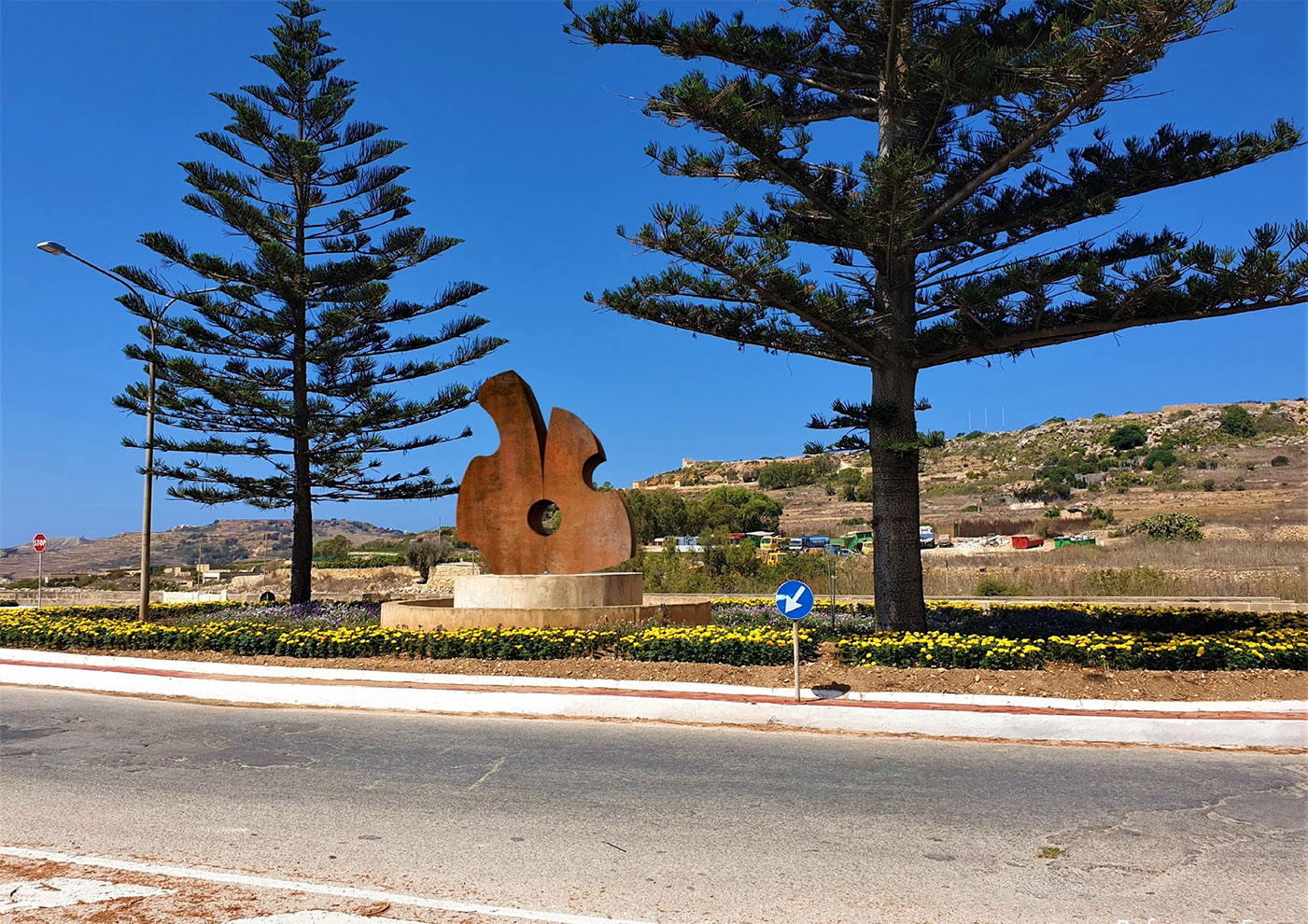
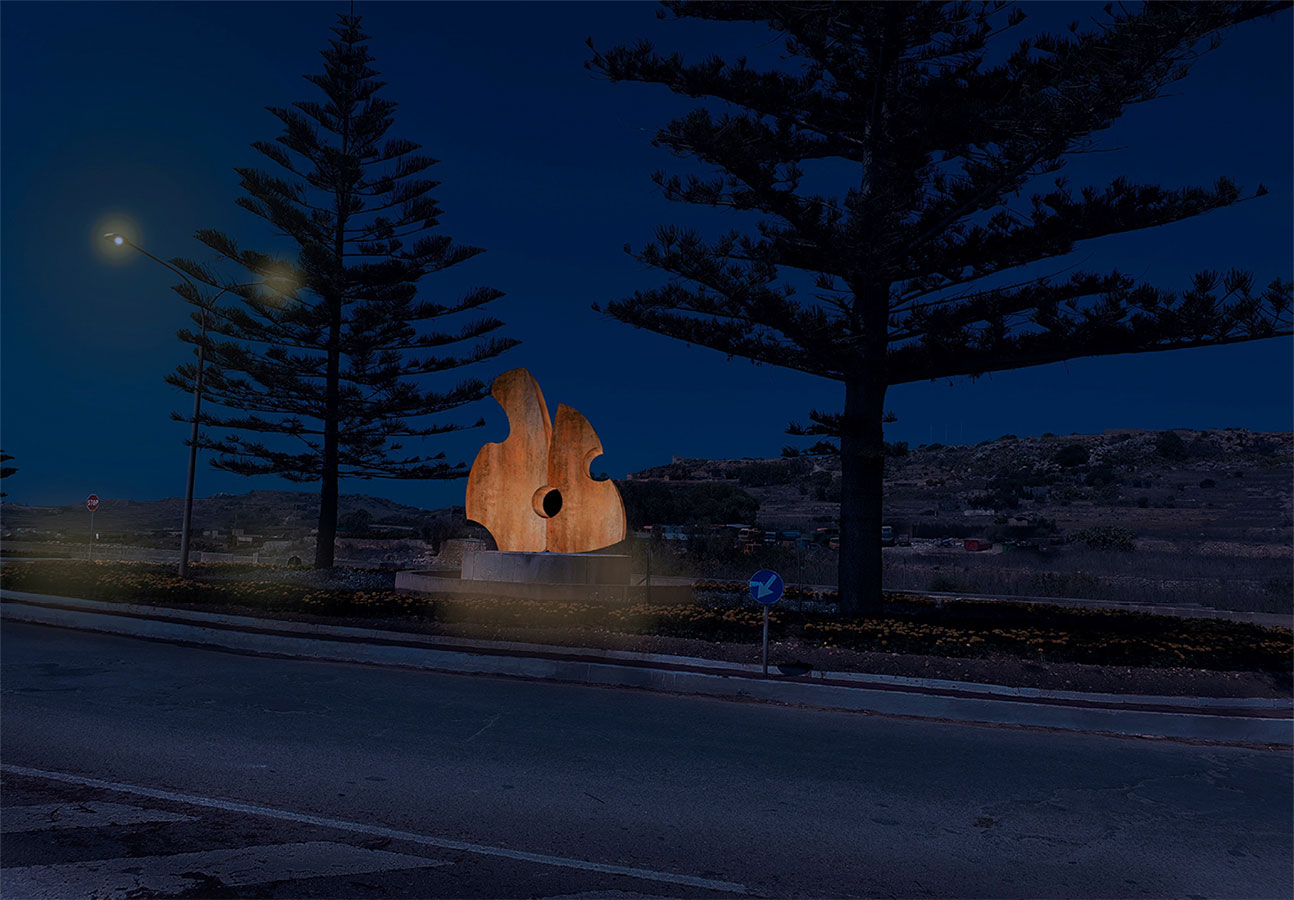
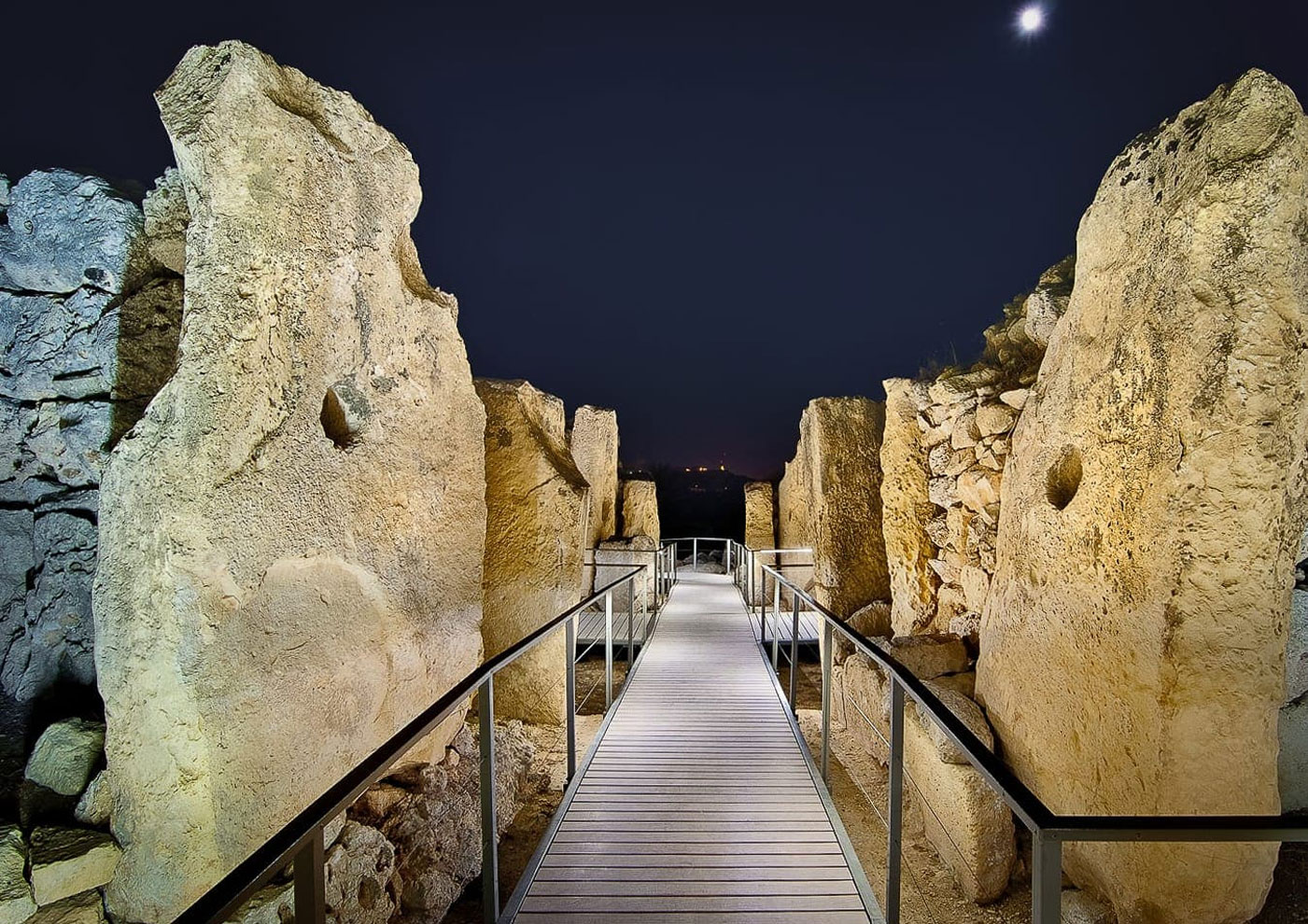
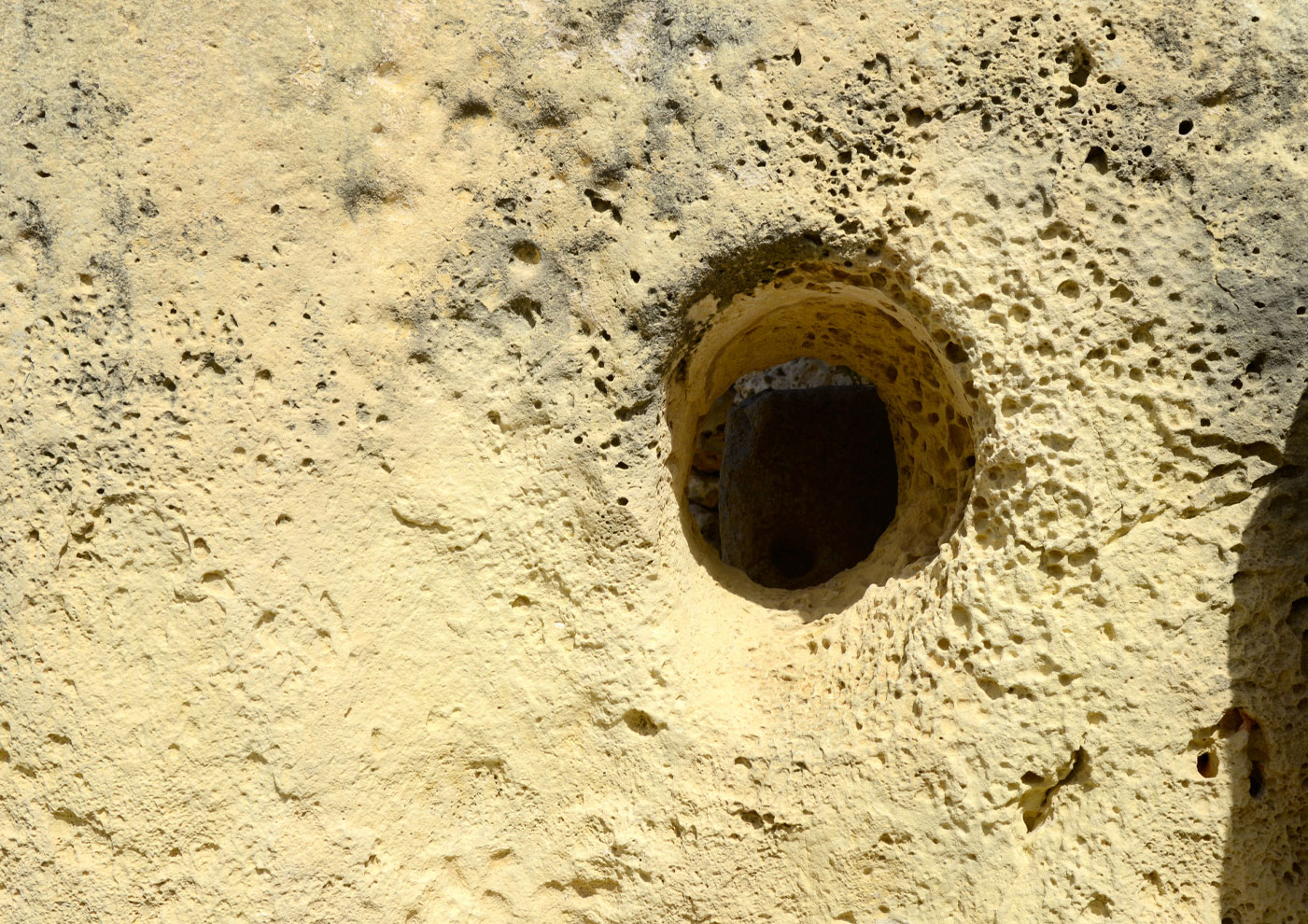
The design (artist’s impression – image reference no. 1) originates from studies of the megalithic stones that adorn the Ggantija Temples and that make Xaghra a world renowned place and a UNESCO World Heritage Site. The image attached illustrating large megalithic stones at the entrance to one of the temples (image reference no. 9) and detail from a megalith (image reference no. 10) inspired me to develop an artistic concept with a contemporary frame of mind. The minimalist approach to this theme captures the grandiosity and monumentality of these megalithic forms. The ultimate aim is to create a balanced composition with interest in harmonious linear and curved shapes. A circular hole appears when both forms come together. The circle is the symbol of totality, wholeness and also as in this case, cyclical history, according to which the periodicity of history is based on the repetition or recurrence of social processes. This work suggests that the historical heritage of our ancestors still bears a weight on what we are as a nation and culture today. At the same time, it also conveys the idea that our nation moved forward and evolved throughout history.
The Choice of Corten Steel.
There is evidence of the internal walls within the Ġgantija Temples having been plastered and painted over, as proven by two rock fragments with red ochre, now on display at the Ġgantija Temples Interpretation Centre. Artists have been painting with ochre, a naturally occurring pigment, for thousands of years.
Ochre is clay pigmented by hematite, a reddish mineral that contains oxidized iron, which is iron that’s been mixed with oxygen. Because ochre is a mineral, it doesn’t wash away or decay, allowing it to persist through the ages. Historians argue that ancient people possibly saw ochre, being a reddish pigment, as a symbol of life, in part because it is the colour of blood. Some societies quite commonly associate the colour red, and therefore ochre, with creation, life and fertility.
The oxidized iron is the common agent found in the pigments used by our ancestors for decorating the temples and the material I chose for my project, that is Corten Steel. The protective rust that Corten weathering steel develops has a distinctive reddish-brown appearance reminiscent of the red ochre surfaces pigmented by our ancestors.
This resistant material is particularly popular among architects and design engineers and is often used in artistic, outdoor structures and contemporary applications. A case in point is the Ggantija Interpretation Centre itself which is also made from Corten steel.
It is special because it is formulated to develop a protective layer of rust that prevents deeper portions of the steel from succumbing to corrosion. The benefits of this are obvious. With Corten steel, the superficial rust is optimized for beauty and durability. On large and imposing surfaces, this naturalistic steel patina is very striking. Its anti-corrosive properties give it an advantage over other structural steels as they keep costs of maintenance to a minimum.